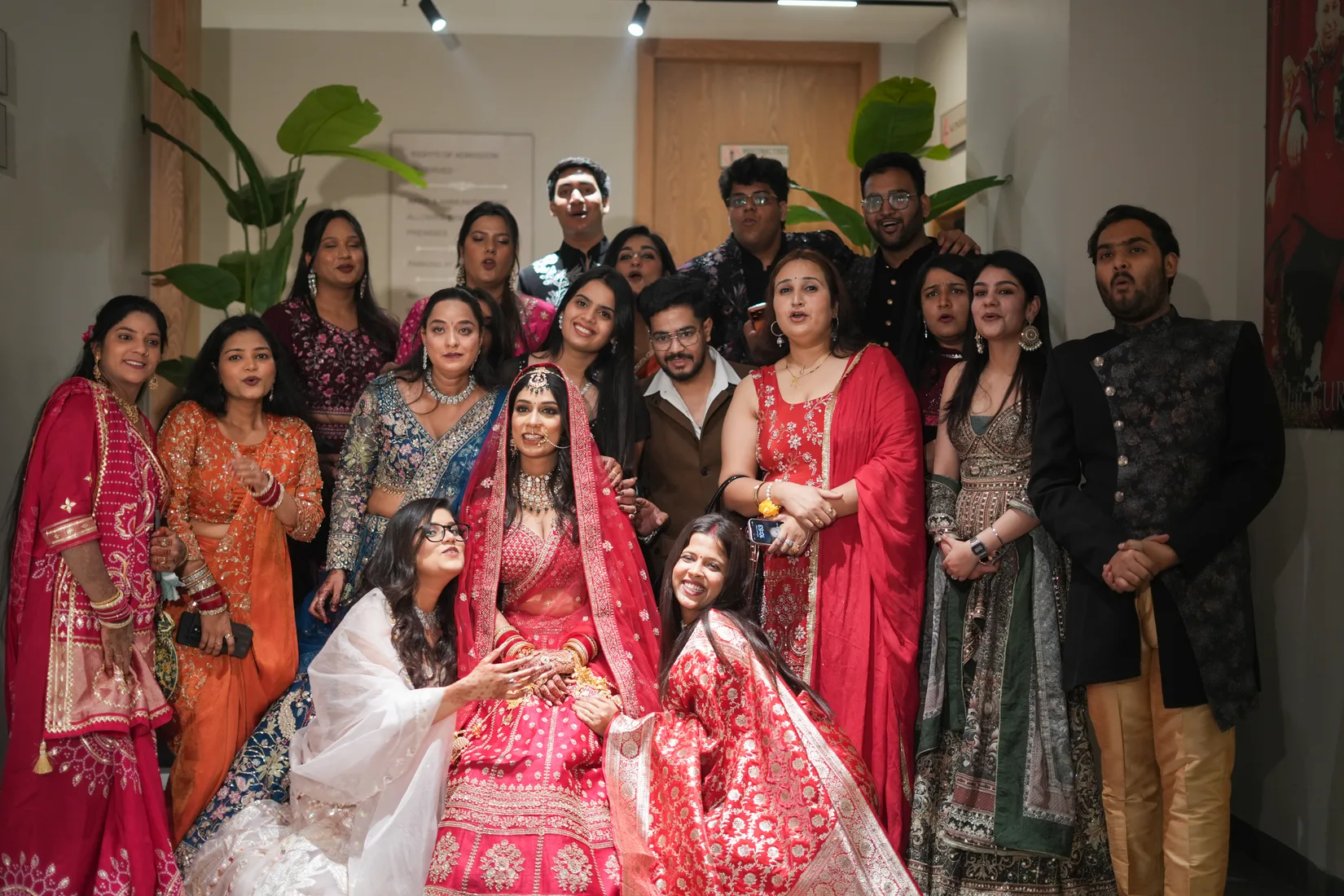
Wedding lehengas, sarees, and gowns are stunning—but positioning matters enormously. Discover posing techniques that flatter every bride's silhouette and show off her investment.
Why Bridal Poses Deserve Specific Thought
Bridal attire is singular. The lehenga, saree, or gown represents months of design thought, significant investment, and profound personal meaning. Unlike regular clothing, wedding wear has structure, volume, and weight that demand different posing considerations. Bridal poses that flatter every bride begin with understanding her garment as an extension of her confidence, not an obstacle to navigate. The challenge intensifies in Indian wedding contexts, where layered fabrics, extensive embroidery, and dramatic silhouettes are the norm.
Every bride's body is different. A petite bride needs different positioning than a tall one; a bride with broader shoulders requires different angles. Rather than applying one-size-fits-all rules, the most effective bridal poses adapt to the individual. This flexibility, combined with knowledge of how fabrics move and rest, transforms good wedding photography into extraordinary bridal portraiture that celebrates each bride's unique presence.
Seated Poses and Standing Compositions
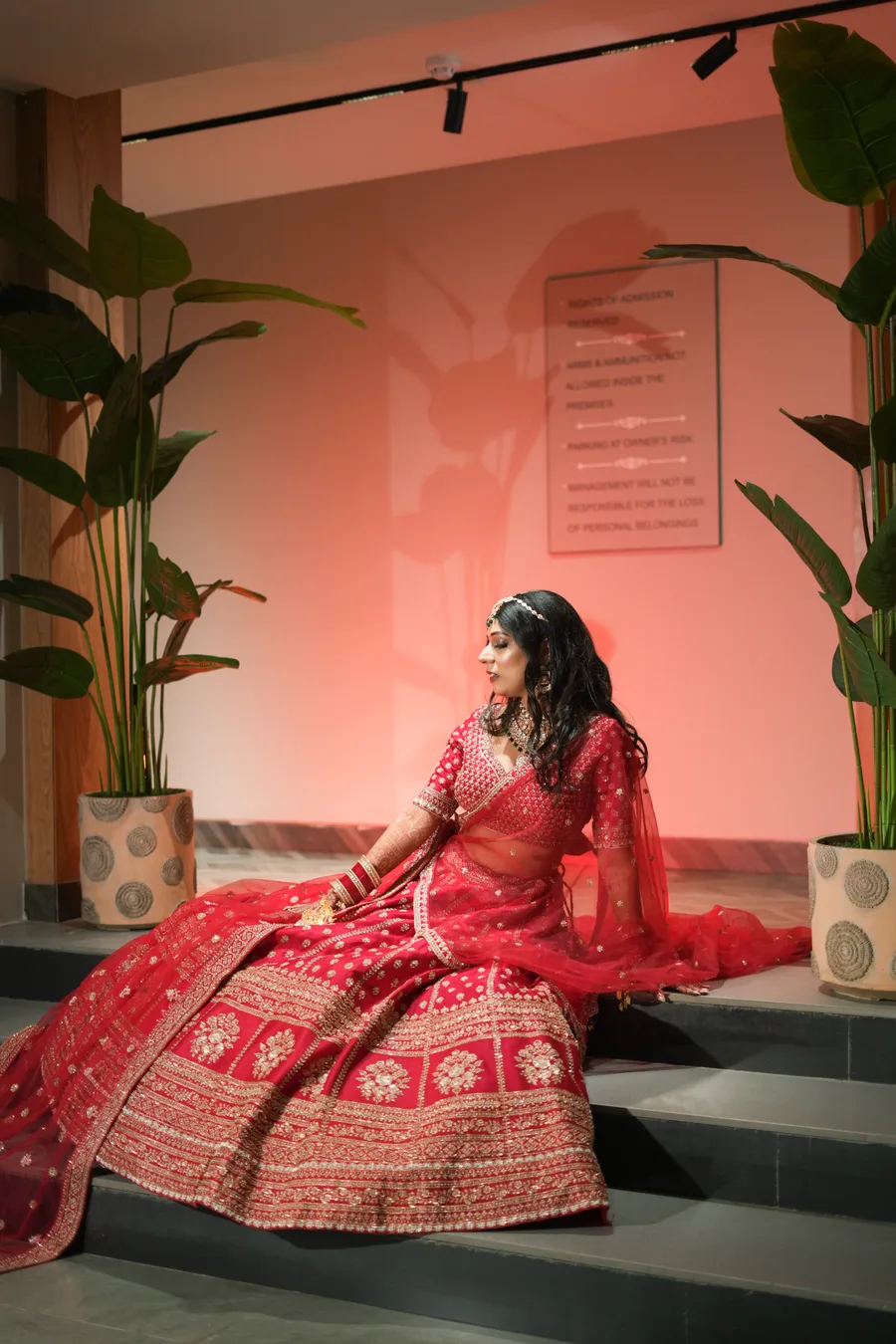
Seated bridal poses offer an immediate advantage: control and comfort. When a bride sits—on a decorated chair or mandap step—her weight settles, her lehenga drapes predictably, and she can hold a position without fatigue. A classic seated pose involves the bride sitting slightly angled to the camera, one hand resting on her knee, the other perhaps touching her jewellery. For a lehenga-wearing bride, arrange the fabric so the patterned border (often the most exquisite element) is visible.
Standing allows full-height display and complete lehenga visibility. Ask her to place weight on her back foot slightly, with her front foot stepped forward, creating a gentle curve rather than rigid stance. The three-quarter turn works beautifully for most brides: position at approximately 45 degrees to show her face and body without flattening effects. For any bride concerned about body aspects, angled poses naturally elongate and slenderise through weight distribution and subtle turning.
Fabric, Movement, and Hand Positioning
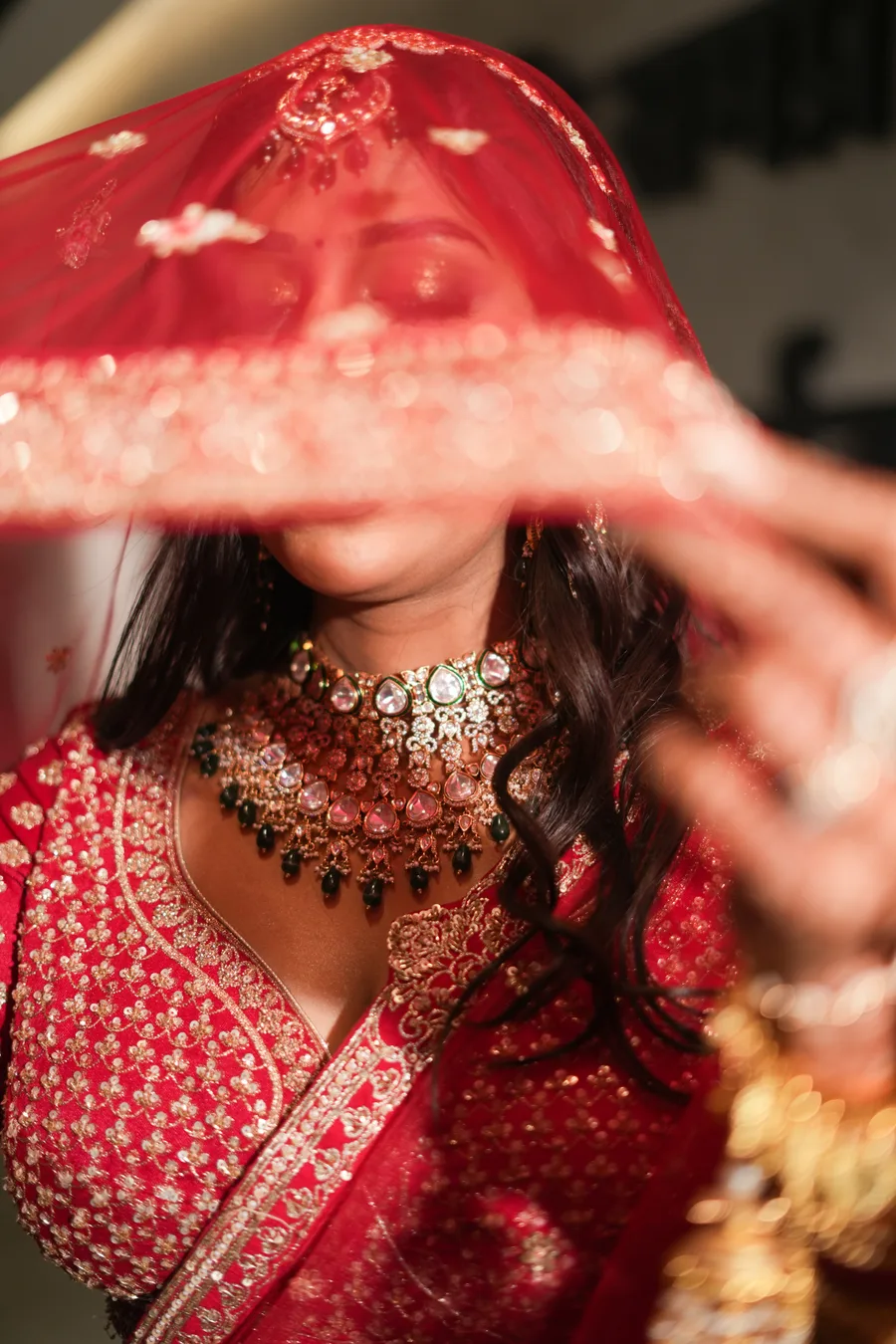
The voluminous lehenga skirt is frequently a bride's source of self-consciousness, yet photographically it's an asset. Ask the bride to hold part of her skirt, lift it slightly, or arrange it deliberately. This gives her hands purposeful jobs (reducing self-awareness), shows embroidery and embellishment details, and creates movement and dynamism. Dupatta (veil) positioning transforms an image: ask the bride to hold it, drape it across her arms, or gently toss it. The movement creates gorgeous light and shadow play.
Bridal jewellery deserves dedicated frames. Hands are frequently overlooked yet they're expressive, beautifully adorned, and tell part of the wedding story. A close-up featuring hands touching her necklace or positioned near her face showcases jewellery while maintaining intimacy. Guide hand positioning with purpose: one hand near jewellery at her neck or holding her dupatta; the other resting naturally. During ceremonies, rings deserve particular attention as symbols of this profound commitment.
Contextual and Movement-Based Posing
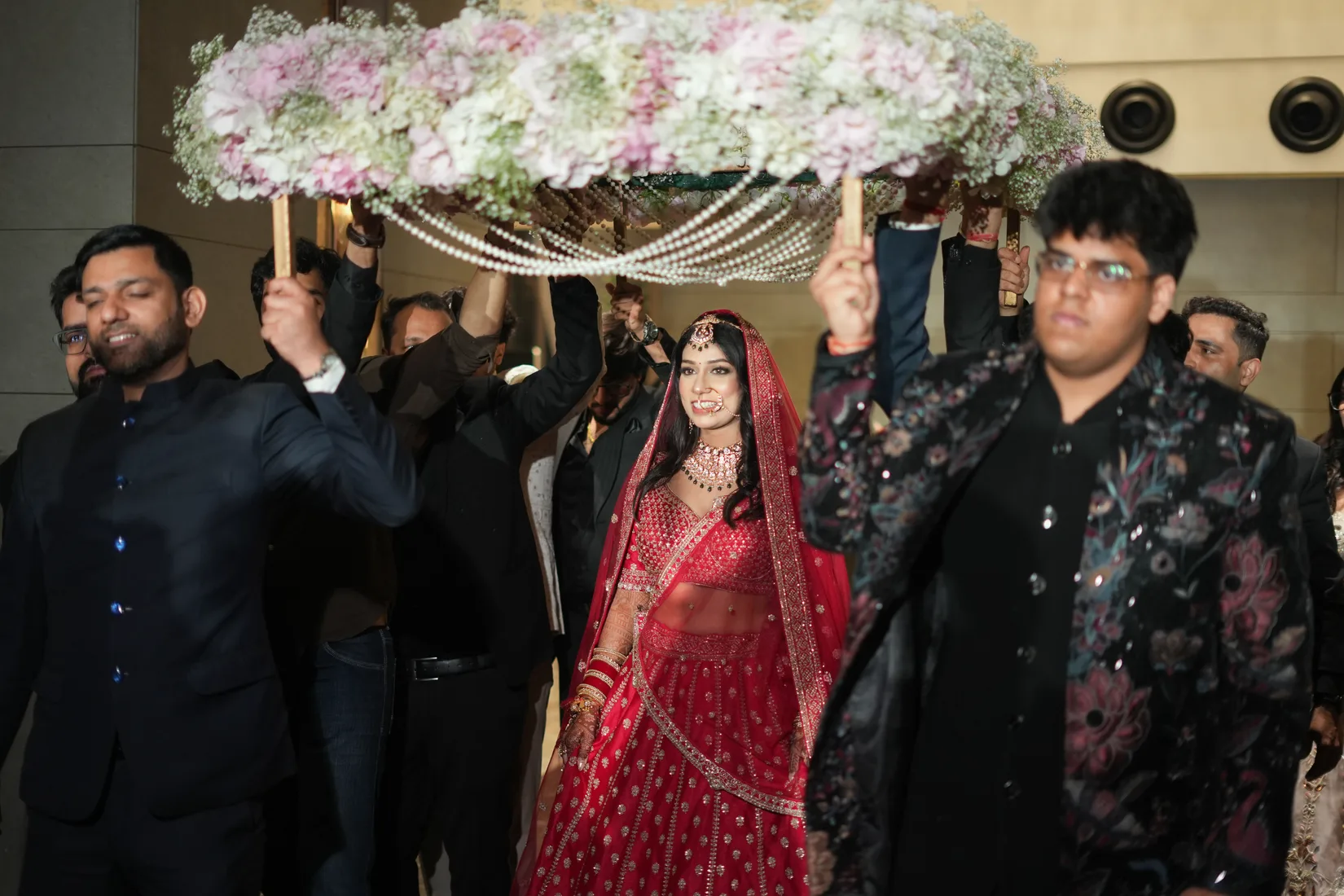
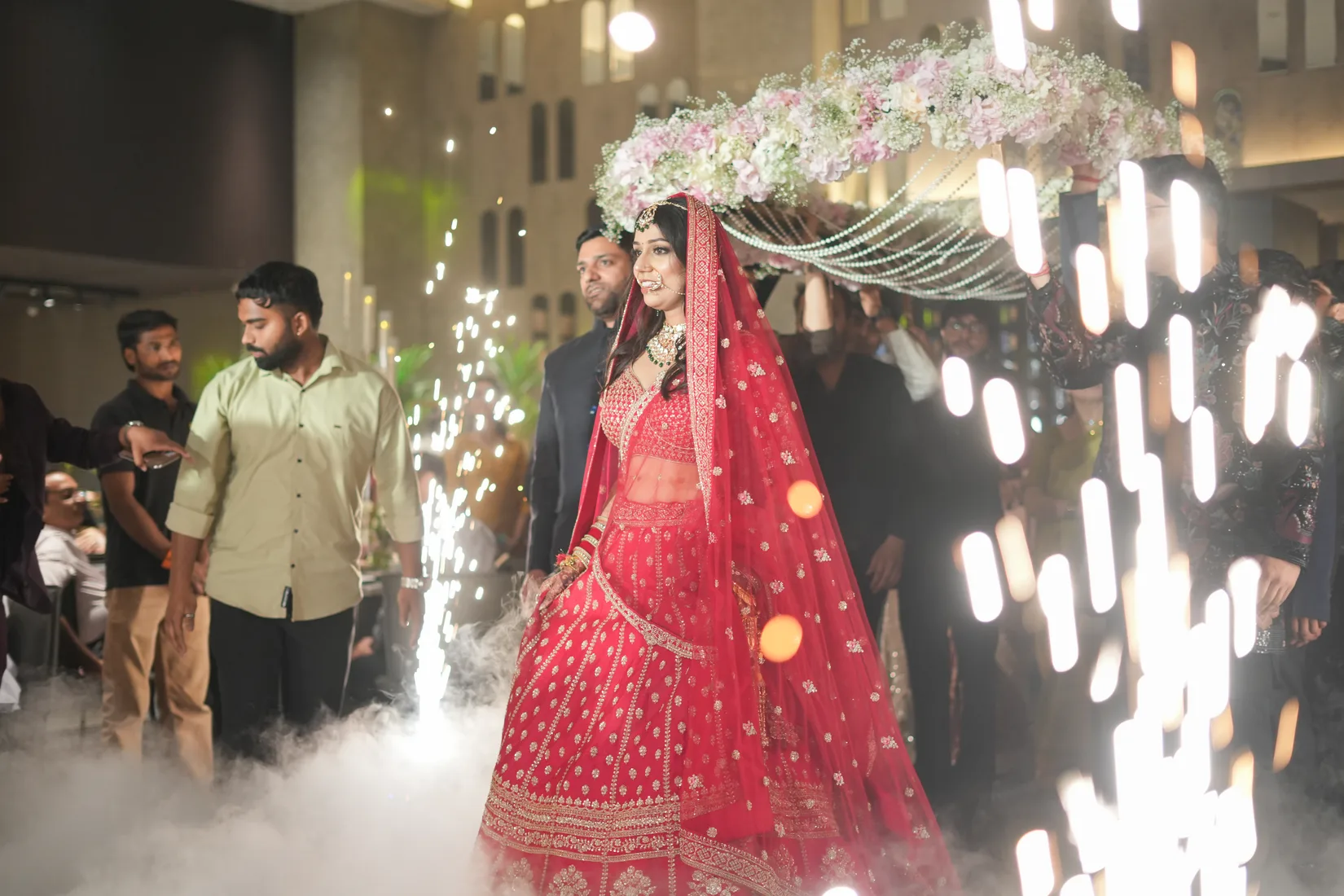
Walking creates authentic bridal moments. Ask the bride to walk slowly toward, away from, or across the frame, allowing the lehenga to shift naturally. Twirling works beautifully for voluminous lehengas, allowing the skirt to spread and settle. These frames often feel more genuine than deliberate posed shots because the body performs its natural function. In Indian weddings, transitional poses—moving between ceremony areas, walking down aisles, or transitioning between events—provide natural opportunities for beautiful bridal photography.
Rather than arranging separate portrait sessions, some of the day's most authentic images emerge during these in-between moments. Photograph her moving, turning, and inhabiting her wedding space naturally. These become the frames that feel most distinctly hers—authentic, candid, and deeply personal.
Adapting to Body Diversity and Personal Vision
Bridal poses that flatter adapt to body diversity. A taller bride's proportions require different framing than a petite bride's. A bride proud of her jewellery receives close-up frames; one thrilled by her lehenga's embroidery gets full-length compositions showcasing it. Ask questions during planning about what aspects she most wants photographed. Rather than imposing 'bridal pose ideals', develop flexibility guided by genuine interest in each bride's unique body, clothing, and confidence.
In Indian wedding communities, body diversity is common and natural. This adaptability, guided by genuine interest in each bride's body and story, becomes your greatest tool. The result is a wedding album where the bride feels represented, celebrated, and authentically herself across every frame.
The Gift of Recognition and Celebration
The ultimate success manifests when the bride sees her album and experiences recognition. She sees herself as she felt on her wedding day—radiant, confident, beautifully adorned. She sees details she invested in—embroidery, jewellery, craftsmanship—as deliberate subjects of celebration. Every bride deserves photography honouring her as she is, making her feel genuinely recognised in every frame.
If you're approaching your wedding portrait session with concerns about how you'll photograph in your attire, we'd welcome a conversation about your vision. At Lens9 Studio, we see every bride's body, garment, and story as worthy of thoughtful, celebration-focused photography. Let's create frames where you genuinely recognise yourself and feel celebrated.