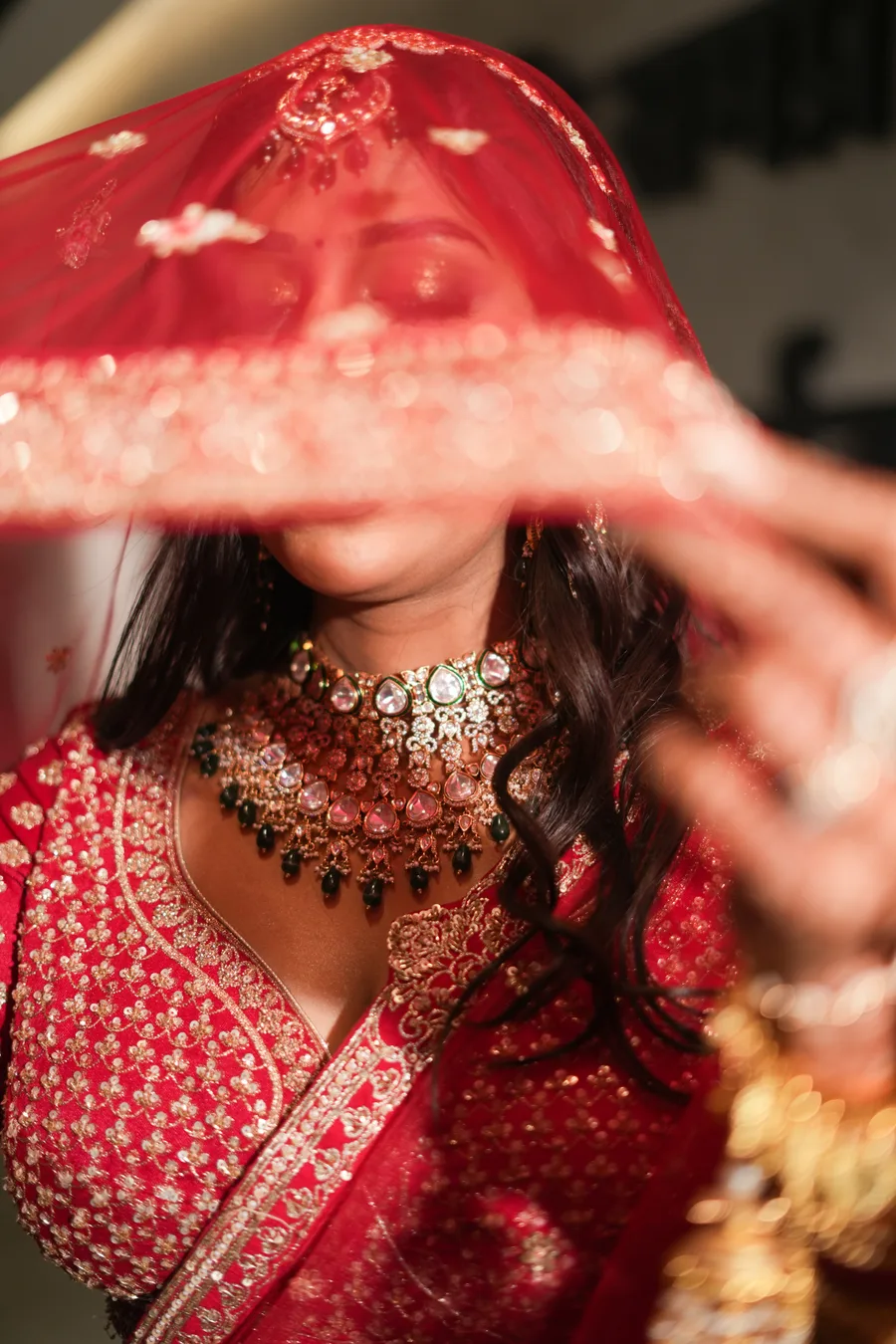
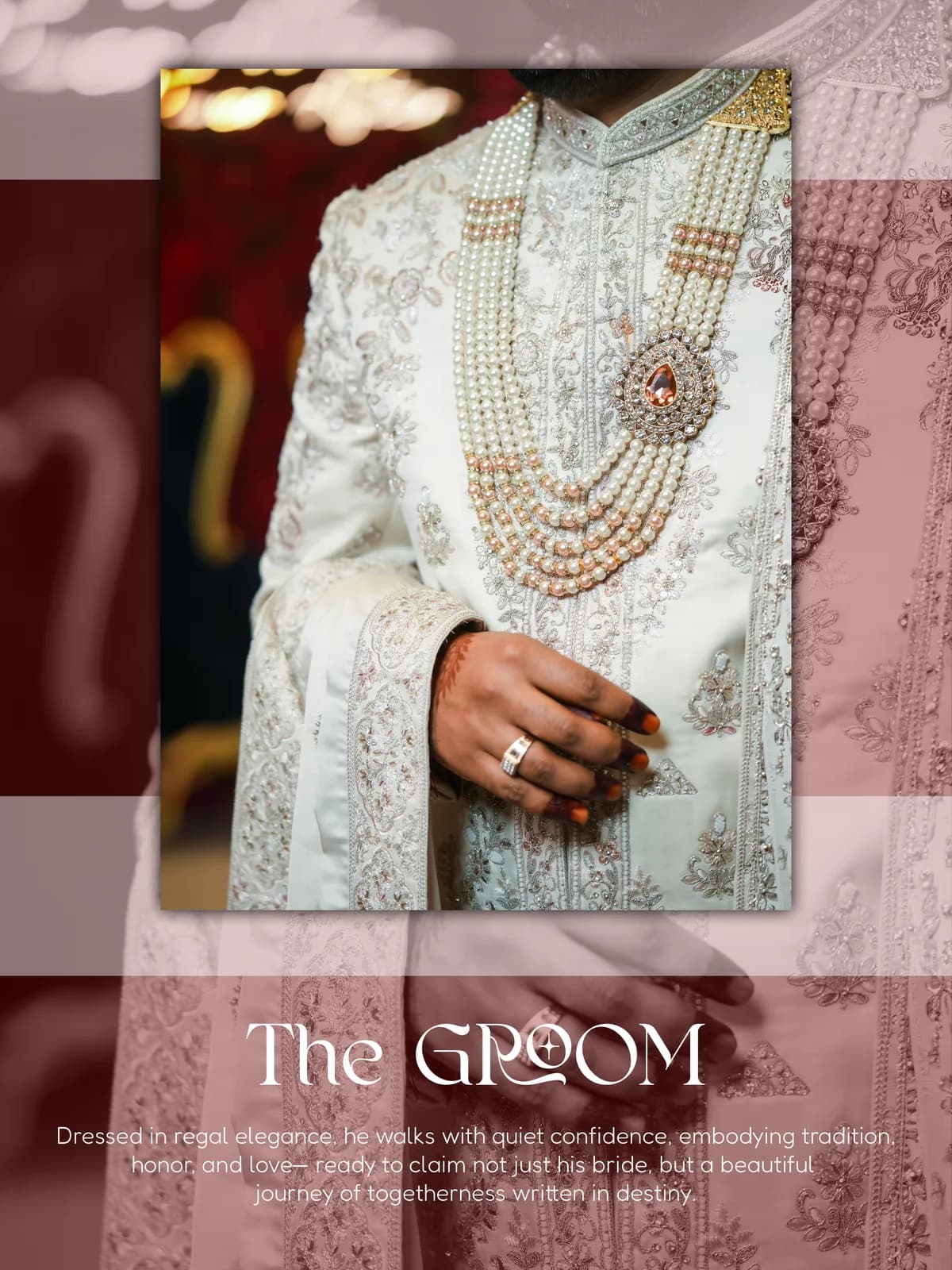
Beyond faces and full frames, wedding details—embroidery, jewellery, flowers, décor—deserve dedicated photography. These intimate shots become the album's sensory foundation.
Why Detail Shots Matter and Their Sensory Impact
A wedding exists across multiple sensory dimensions: the visual spectacle of the lehenga, the tactile richness of embroidery, the scent of flowers and incense, the sound of music and laughter. Wedding photography, constrained to visual documentation, can only capture some of this experience. Detail shots bridge this gap. A close-up of intricate zardozi (gold thread embroidery) conveys the tactile richness of the bride's garment in ways a full-length photograph cannot. Macro shots of jewellery reveal the craftsmanship and precision invested in each piece.
Detail shots also serve as visual breaks in an album's rhythm. After several full-length couple frames or ceremony photographs, a detail shot provides visual respite while maintaining narrative continuity. In Indian weddings particularly, detail shots become essential documentation. The mehndi applied with painstaking care deserves frames honouring its artistry. The embroidery work completed over weeks warrants close-up documentation celebrating its intricacy.
Essential Details and Technical Requirements
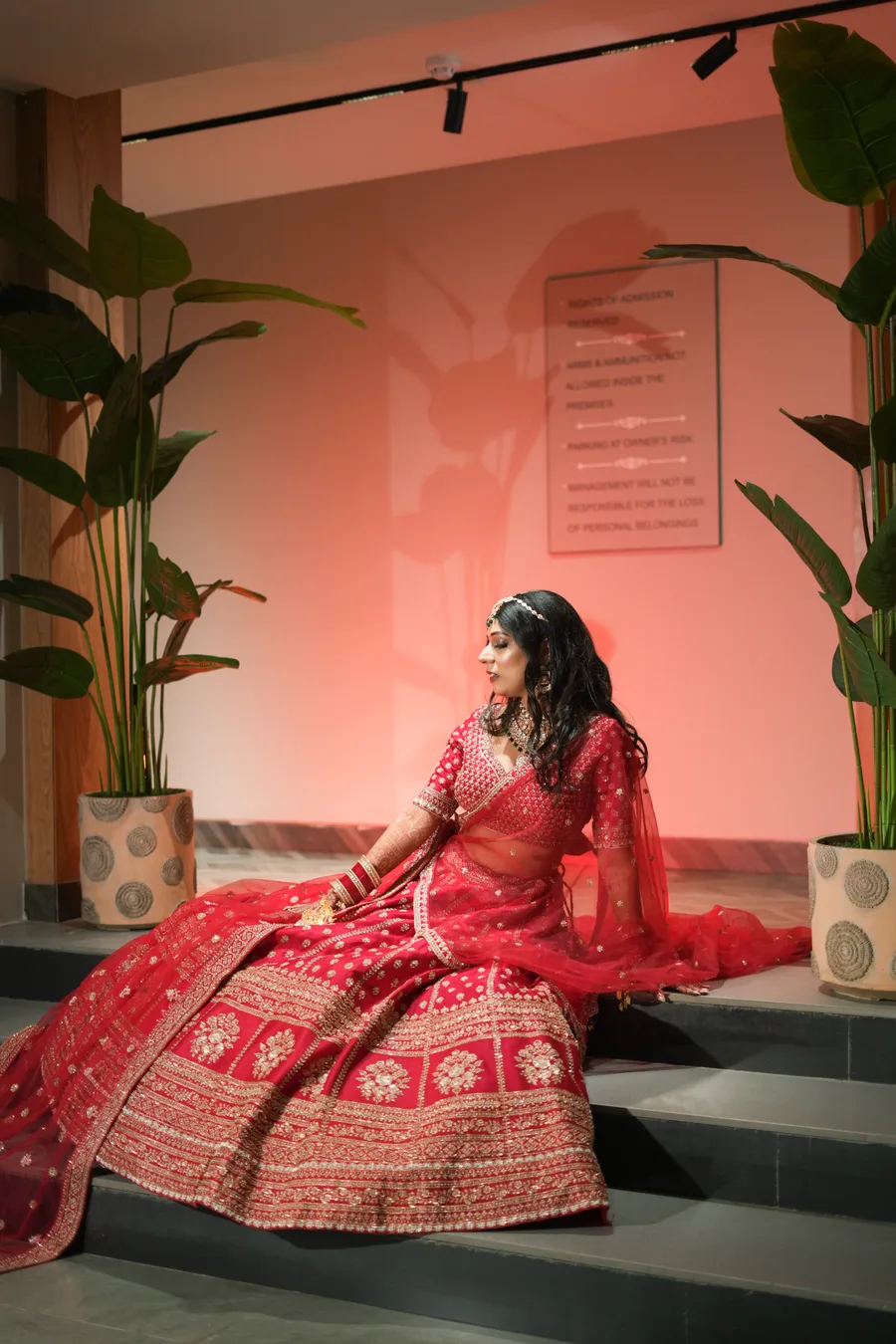
Bridal embellishment details form detail photography's heart. Capture the lehenga's embroidery at various magnifications, the dupatta and its borders, close-ups of bangles, necklaces, and rings. Jewellery deserves dedicated shooting: photograph each piece individually against skin, showing the piece's scale and impact. Venue details matter too: the mandap's flower arrangements, entrance décor, table settings, any special installations—photograph these at scales revealing craftsmanship.
Detail photography demands technical precision. Macro lenses (ideally 100mm) allow filling frames with jewellery or embroidery details, revealing texture and craftsmanship. Ensure your autofocus is precise; use manual focus if needed. Depth of field becomes a creative decision: extremely shallow depth creates dreamy frames; greater depth ensures the entire detail reads sharp. Lighting transforms detail photography: position subjects to catch directional light revealing texture and dimension. For darker details, you might need fill light or reflectors.
Mehndi Documentation and Environmental Details
Mehndi (henna) occupies a unique place in Indian wedding detail documentation. Applied hours before ceremony, mehndi artistry deserves frames celebrating its intricate patterning. Photograph hands immediately after application, showing the bright orange henna before it oxidises to deep brown. Capture close-ups revealing patterns' details—fine lines, diamond patterns, names often hidden within designs. Frame hands against the bride's lehenga showing colour interaction, and photograph again as the mehndi darkens, documenting the transformation.
Indian wedding venues often feature elaborate floral installations. The mandap dripping with flowers, entrance corridors lined with arrangements, stage backdrops designed for celebration—these deserve detailed documentation. Photograph individual flower combinations at close range, revealing bloom variety, colour relationships, and florist's aesthetic choices. Table settings, particularly at receptions, often feature thoughtful detail work: photograph table florals, name cards, place settings, and special touches. The groom's attire deserves equal detail attention: his shawl, turban, rings, and accessories warrant dedicated photography.
Comparative Shots and Integration Strategy
Comparative jewellery shots—the bride's and groom's rings together, their hands with respective rings visible, other jewellery pieces photographed as a pair—create frames celebrating both individuals. Frame the groom's hands beside her mehndi-adorned hands; show his ring near hers; photograph his shawl and her dupatta together. These comparative shots show the wedding as partnership, documenting both individuals' contribution to the aesthetic and ceremonial experience.
Detail shots serve best when strategically distributed through an album rather than clustered separately. After an intense emotional moment, a detail photograph provides visual and emotional respite. After series of large-scale venue shots, a close-up refocuses attention on human artistry. This rhythm of expansion and contraction creates albums feeling alive and varied. Thematic grouping also works: several detail shots of the bride's adornment grouped together create comprehensive documentation.
Post-Processing and Visual Enhancement
Detail shots often benefit from slightly enhanced contrast and saturation compared to broader wedding photography. The jewellery's gleam should read clearly; embroidery's texture should feel almost tactile. Enhanced sharpness can make intricate work pop visually. Warm colour tones often suit detail shots beautifully, particularly jewellery and warm-toned embroidery. These subtle enhancements don't distort reality; they amplify visual richness that drew you to photograph the detail.
Consistency in editing style becomes important when detail shots sit alongside full-frame photographs. If your full-frame work carries specific colour grade or stylistic approach, maintain consistency. At Lens9 Studio, we believe detail shots are as integral to wedding stories as large-scale frames—they deserve equal attention in shooting, framing, and post-processing to create albums celebrating every dimension of your celebration.