Palace venues demand a completely different photographic approach than gardens or urban spaces. Learn how to navigate palace wedding photography, dress for grandeur, and create images where architecture and beauty work in perfect harmony.
Understanding Palace Venues and Photographic Challenges
Palace wedding photography is a distinct discipline that requires photographers to manage enormous architectural grandeur, complex lighting conditions, challenging interior spaces, and the crucial task of ensuring the couple looks appropriately scaled and present within such impressive settings. Many couples fall into the trap of viewing their palace venue as a spectacular backdrop that will automatically make photographs beautiful, but the reality is that palace wedding photography requires deliberate composition, strategic wardrobe choices, and intentional styling to ensure the couple doesn't become dwarfed by or lost within the architectural magnificence.
The best palace wedding photographs achieve balance: the architecture enhances the couple's beauty rather than overshadowing it, the scale of the venue emphasises the grandeur of the occasion, and the couple's styling reads with appropriate presence and luxury within such opulent settings. Understanding how palace spaces photograph—which areas have beautiful light, which corridors or courtyards create stunning backgrounds, how the architecture needs to be composed to flatter rather than dwarf the subjects—is essential for creating successful palace wedding imagery.
Architectural Considerations and Composition Strategy
Palace venues typically feature soaring ceilings, grand staircases, ornate columns, and impressive symmetry that can either create stunning photographic compositions or make couple positioning extremely challenging. A talented photographer will use the palace's architectural lines to frame and complement the couple rather than allowing the architecture to overwhelm the frame. This might mean positioning the couple against a grand staircase with the symmetrical architecture creating balance behind them, or in a courtyard where the palace walls frame the composition without crowding the subjects.
The challenge intensifies during palace wedding photography when lighting is mixed or dim—ornate indoor palace spaces often feature dramatic window light, chandeliers, and shadows that create complex lighting situations. Photographers working in palace venues need to understand how to expose for both the architectural details and the couple's faces, manage the contrast between bright windows and shadowed interiors, and use lighting equipment strategically without overwhelming the space. Understanding your venue's specific architectural layout and lighting challenges well in advance (through a pre-wedding shoot or venue walkthrough with your photographer) allows for better planning and execution of palace wedding photography.
Wardrobe Choices in Palatial Settings
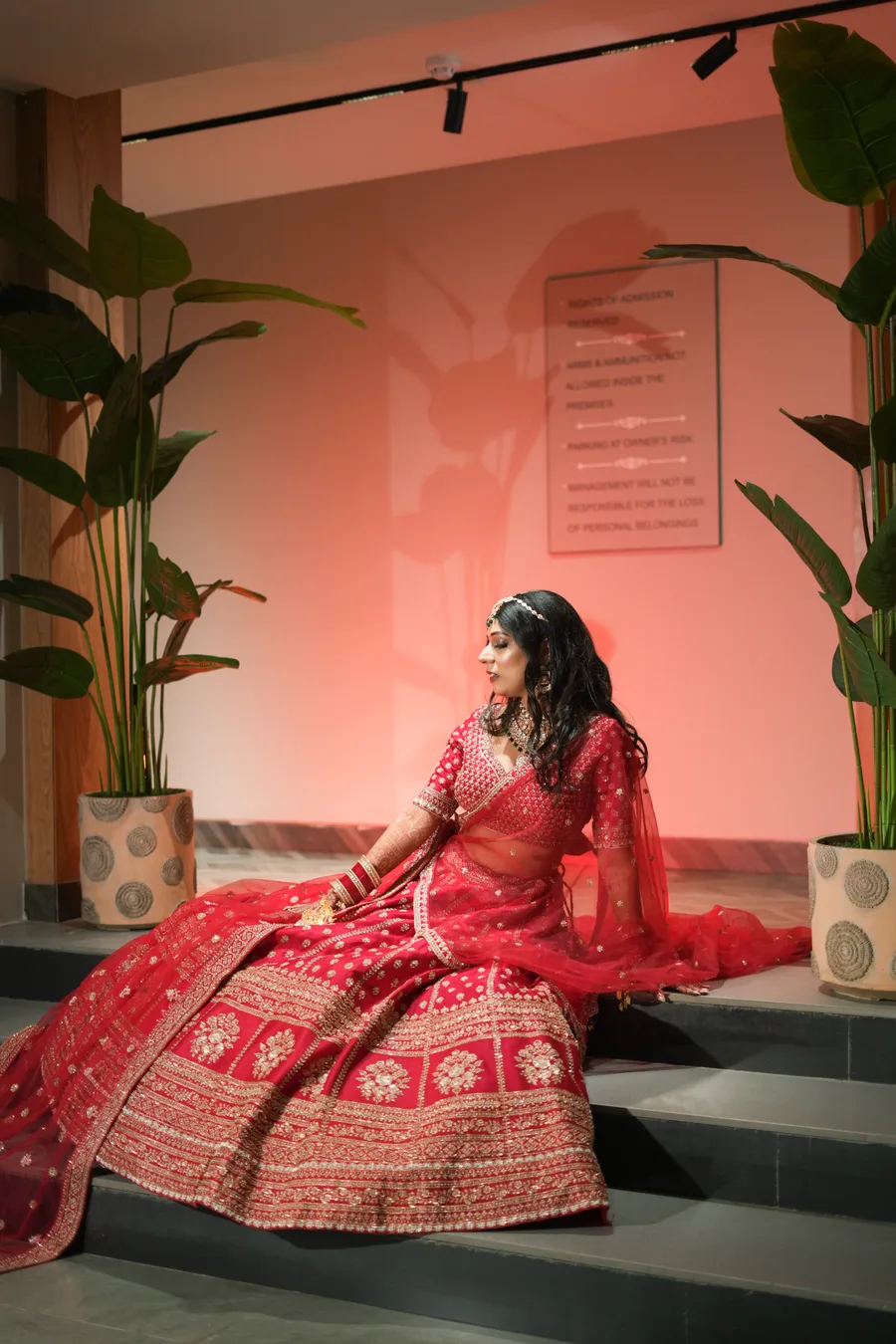
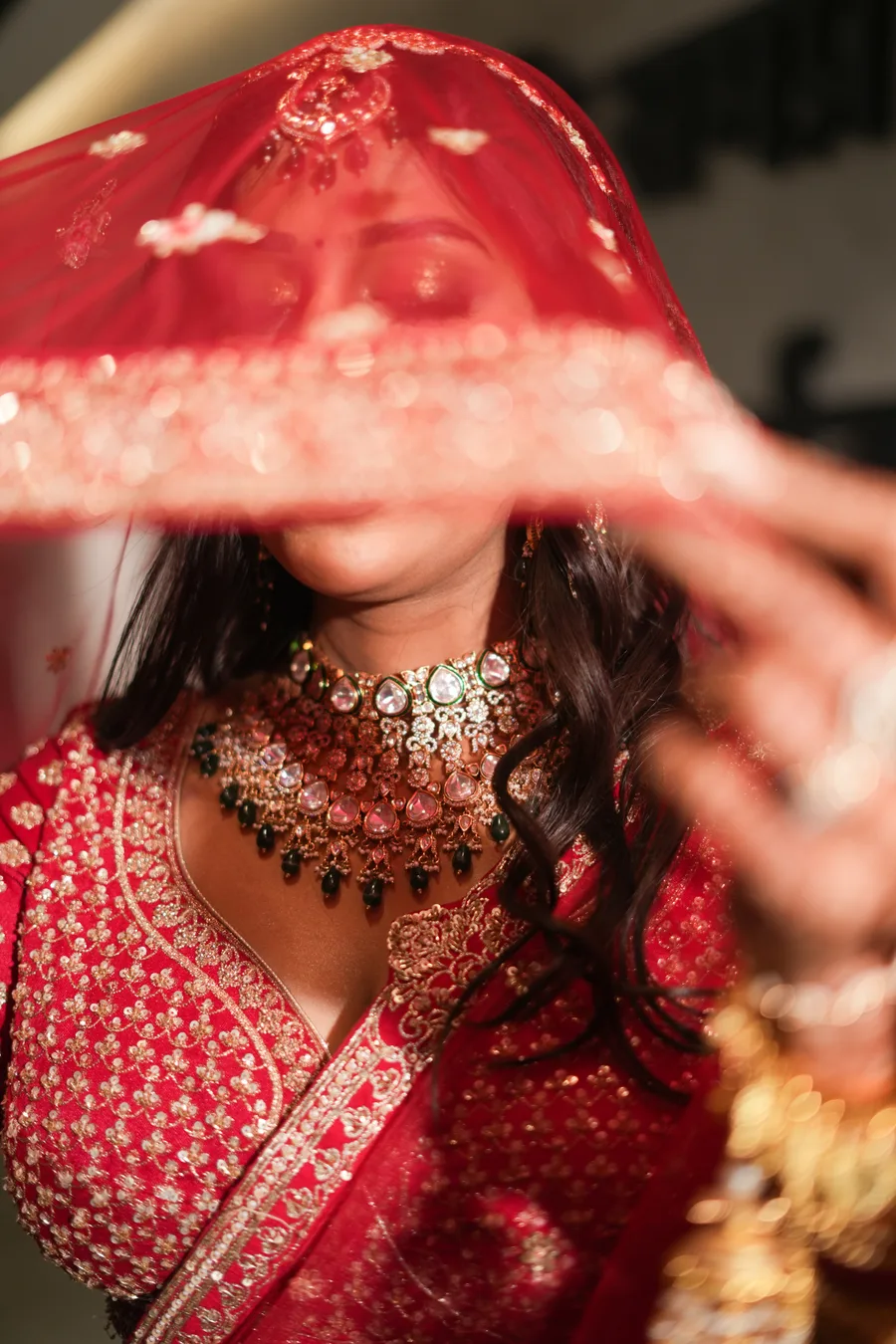
The bride's lehenga and groom's sherwani take on heightened significance in palace settings, because these garments must read as appropriately luxurious and grand within an already opulent environment. A lehenga with extensive embroidery, a rich colour, and substantial visual presence photographs as appropriately positioned within palace settings, whereas a simpler or lighter lehenga might photograph as underdressed or visually overwhelmed by the architectural grandeur around it. This doesn't mean choosing an unnecessarily heavy or over-embellished lehenga; it means ensuring your chosen outfit has sufficient visual presence to hold its own photographically within such grand spaces.
The groom's sherwani should similarly reflect the scale of the venue. A heavily embroidered or ornate sherwani photographs as more appropriately positioned in palace settings than a very simple cream sherwani, though the specific choice depends on your overall aesthetic and the bride's outfit. Gold embellishment and metallic details photograph particularly beautifully in palace settings, where chandeliers and ornate lighting create opportunities for luxurious-looking sparkle. Consider scheduling a visit to your palace venue with your photographer before finalising your outfit choices, allowing them to advise on how your intended lehenga and sherwani will photograph within that specific architectural context.
Positioning, Scale, and Making the Couple Look Appropriately Present
In palace wedding photography, positioning the couple appropriately within grand spaces requires specific techniques. Photographers might choose to shoot close-ups or mid-range shots that de-emphasise the surrounding architecture when the scale of the space threatens to overwhelm the subjects, or they might intentionally frame wider shots that showcase the architectural grandeur whilst keeping the couple prominently positioned. The key is ensuring that the couple looks confidently present and beautifully scaled within their opulent setting, rather than dwarfed or tiny in relation to their surroundings.
Couple positioning becomes even more critical in palace settings: standing on grand staircases, in vast courtyards, or against ornate backgrounds requires specific posing to ensure the couple photographs with presence and intimacy despite the grandeur surrounding them. A skilled palace wedding photographer will guide you into poses that feel natural whilst photographing as intentionally composed, creating images where the couple's connection and beauty shine through the architectural magnificence rather than being obscured by it.
Lighting, Golden Hour, and Timing Considerations
Palace venues often feature challenging mixed lighting: ornate chandeliers, dramatic window light, and dark interiors that can create exposure nightmares or beautiful, moody images depending on how the photographer manages the light. Understanding your palace's lighting at different times of day—how direct sunlight streams through windows at midday, how golden hour light transforms specific courtyards or exterior spaces, how chandeliers photograph during evening celebrations—allows for strategic timing of key photography.
Many successful palace weddings schedule outdoor couple photography during golden hour, taking advantage of the warm, directional light to beautifully illuminate the couple against architectural backdrops. This timing strategy is often essential in palace settings where interior lighting is unpredictable or challenging for photography. Discuss with your photographer which areas of your palace venue photograph best at which times of day, and schedule your couple portraits and detail photography accordingly to maximise the quality of light and the overall photographic success of your wedding day.
Creating Intimacy and Authenticity Within Opulence
One of the most important considerations in palace wedding photography is ensuring that the grandeur of the venue doesn't overshadow the emotional intimacy and joy of your wedding day. Photographs of stunning palaces with beautiful architecture but no genuine human connection can feel cold and impersonal. The best palace wedding photography combines architectural grandeur with authentic moments, genuine emotion, and real connection between the couple.
This means planning for both composed, architectural photographs that showcase your venue's magnificence and candid, intimate moments that capture the joy and love of your wedding day. It means choosing styling and posing that allows you to feel genuinely yourselves within formal, palatial settings, rather than feeling like figures in an elaborate stage set. When you're planning a palace wedding and want expert guidance on how to photograph beautifully within such grandeur, ensuring both the venue and your love story shine through every image, we'd love to connect with you and discuss your vision—our team has photographed countless palace celebrations and understands exactly how to balance architectural magnificence with intimate, joyful storytelling.