Wedding venues are beautiful, but people are the story. Learn how to photograph décor generously while keeping couples and families as clear focal points.
The Balance Between Venue and Narrative
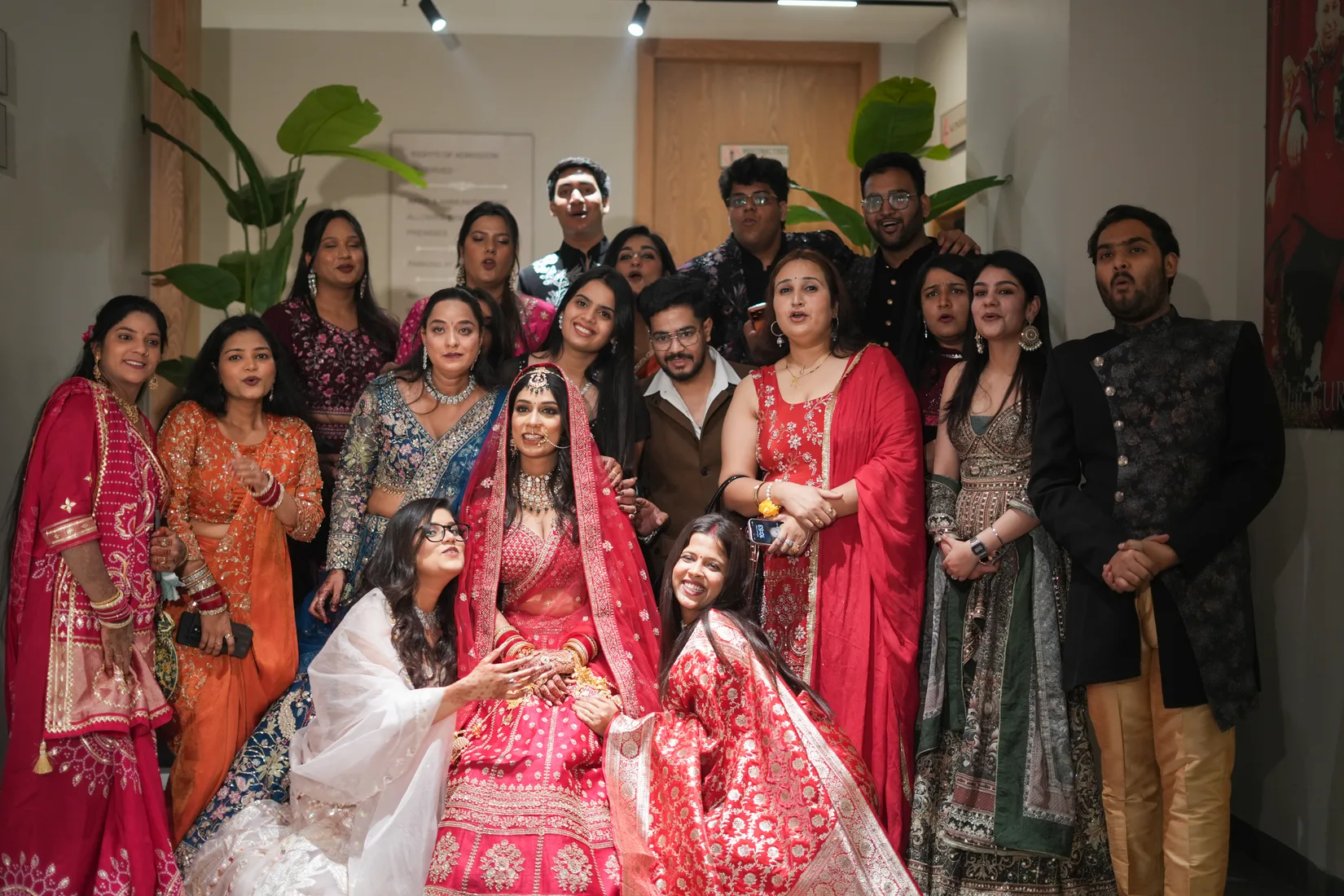
Wedding venues, particularly in Indian celebrations, often receive tremendous creative investment. Elaborate mandap designs, floral installations, atmospheric lighting, thematic décor—couples spend considerable money and effort creating beautiful environments. Yet photographing wedding décor without losing the people represents one of photography's central challenges. An album full of venue beauty but lacking human presence feels empty; conversely, an album focused only on people without contextualising their venue misses the complete story.
The temptation toward venue-dominant photography emerges easily. A beautifully lit mandap, elaborate floral backdrop, atmospheric lighting—these photograph compellingly and require no posing or coordination. Yet your role isn't creating a venue catalogue; it's documenting a couple's wedding within its setting. This balance becomes particularly crucial in Indian weddings, where venue design reflects specific cultural aesthetics and the couple's personal style. Properly documented, décor enrich the wedding narrative.
Compositional Frameworks and Visual Hierarchy
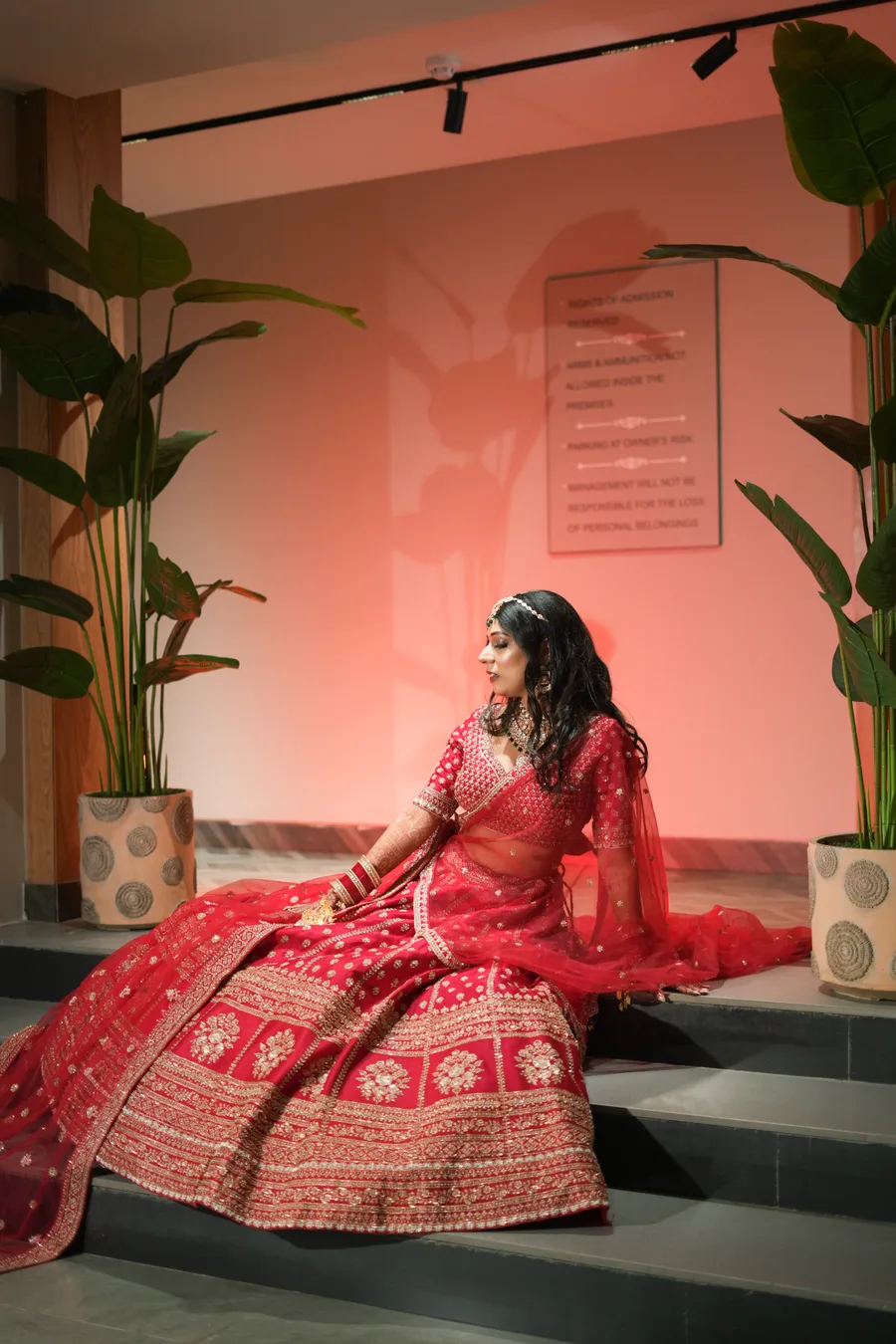
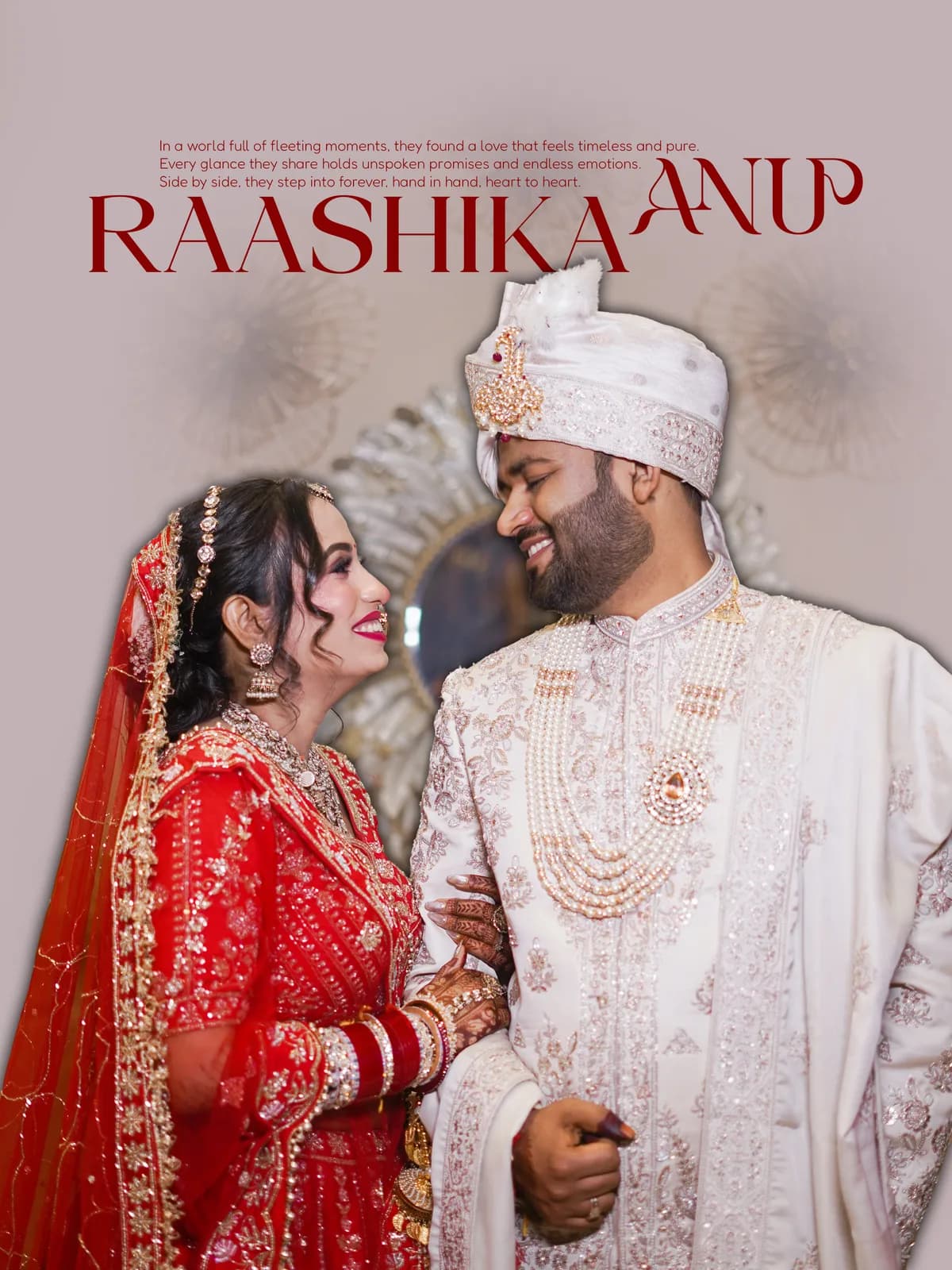
The most effective compositional approach places people clearly in the frame's hierarchy while incorporating décor as context. Rule of thirds becomes your ally: position primary subjects (the couple, a family member, the person performing ritual) according to this grid, with venue elements filling remaining space. This immediately establishes human subjects as primary. A bride positioned in the frame's right third, with the mandap's elaborate flowers occupying left and background thirds, creates a frame where she remains visually dominant.
Framing through foreground elements offers another powerful technique. Position foliage, flowers, or structural elements slightly out of focus in the foreground, creating a natural frame through which couple and venue appear. This compositional choice simultaneously celebrates décor and maintains clear subject hierarchy by rendering it soft and atmospheric. Negative space—deliberately empty areas within the frame—also serves this balance. Allow portions of the frame to remain relatively simple, directing viewer attention toward subjects without overwhelming them with background detail.
Lighting, Depth, and Strategic Timing
Lighting and focus work together to manage visual hierarchy. When subjects are well-lit and sharply focused while backgrounds receive softer light and less sharp focus, viewers instinctively perceive subjects as primary. Use aperture strategically: an f/2.8 or wider aperture creates shallow depth of field, keeping subjects sharp while backdrops soften. Positioning subjects in front of (rather than within) décor enhances separation. When the couple stands in front of the mandap with clear space between them and the structure, they become visually distinct rather than merged.
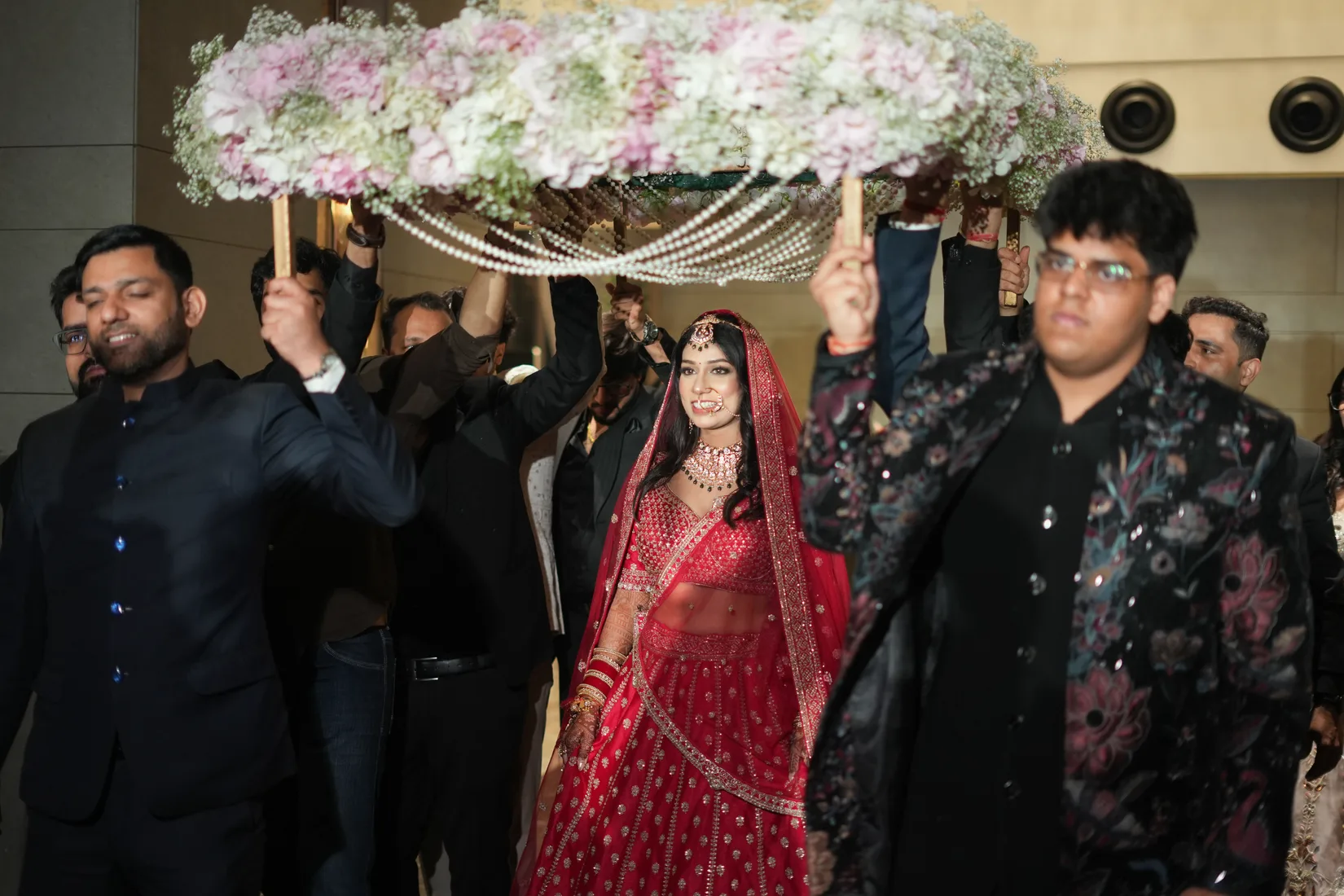
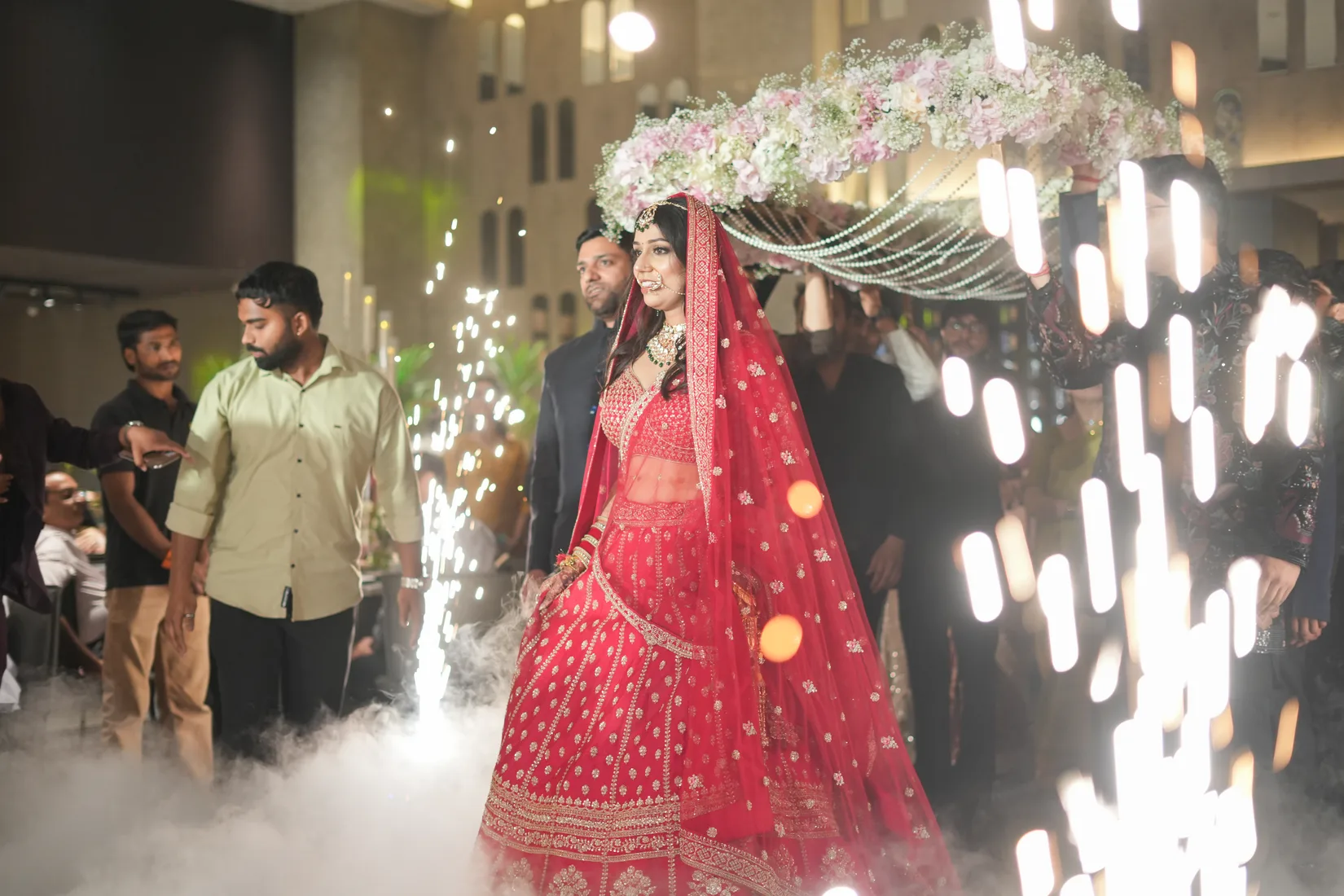
Certain moments within a wedding naturally create frames where people and décor coexist beautifully. The ceremony, when the couple stands beneath or within the mandap, offers inherent composition. The couple's entrance to receptions offers another moment of natural alignment. As they approach decorated stages or seating areas, décor frames their movement. Social moments—the couple moving through the reception, greeting guests, interacting with the decorated venue—naturally combine people and environment.
Managing Complexity and Visual Simplification
Indian wedding venues, while beautiful, often contain tremendous visual information. Multiple colour schemes, layered decorative elements, competing light sources—this density can overwhelm photographs. Simplifying visual information doesn't mean avoiding richness; it means directing viewer attention clearly. Choose compositions emphasising one or two décor elements rather than attempting to include everything. A couple photographed against a single floral arch reads more clearly than photographed within an entire mandap's visual cacophony.
Selective focus achieves this simplification. Zoom in tighter than you might instinctively prefer, cropping away peripheral clutter. Timing within moments also helps. As the couple moves through a venue, different angles and positions create varying levels of visual simplicity. Wait for moments when subjects move in front of cleaner backgrounds. Colour psychology guides choices too: when the couple wears warm-toned clothing and décor features cool tones (or vice versa), the colour contrast naturally separates subjects from background.
Exposure, Grading, and Contextual Framing
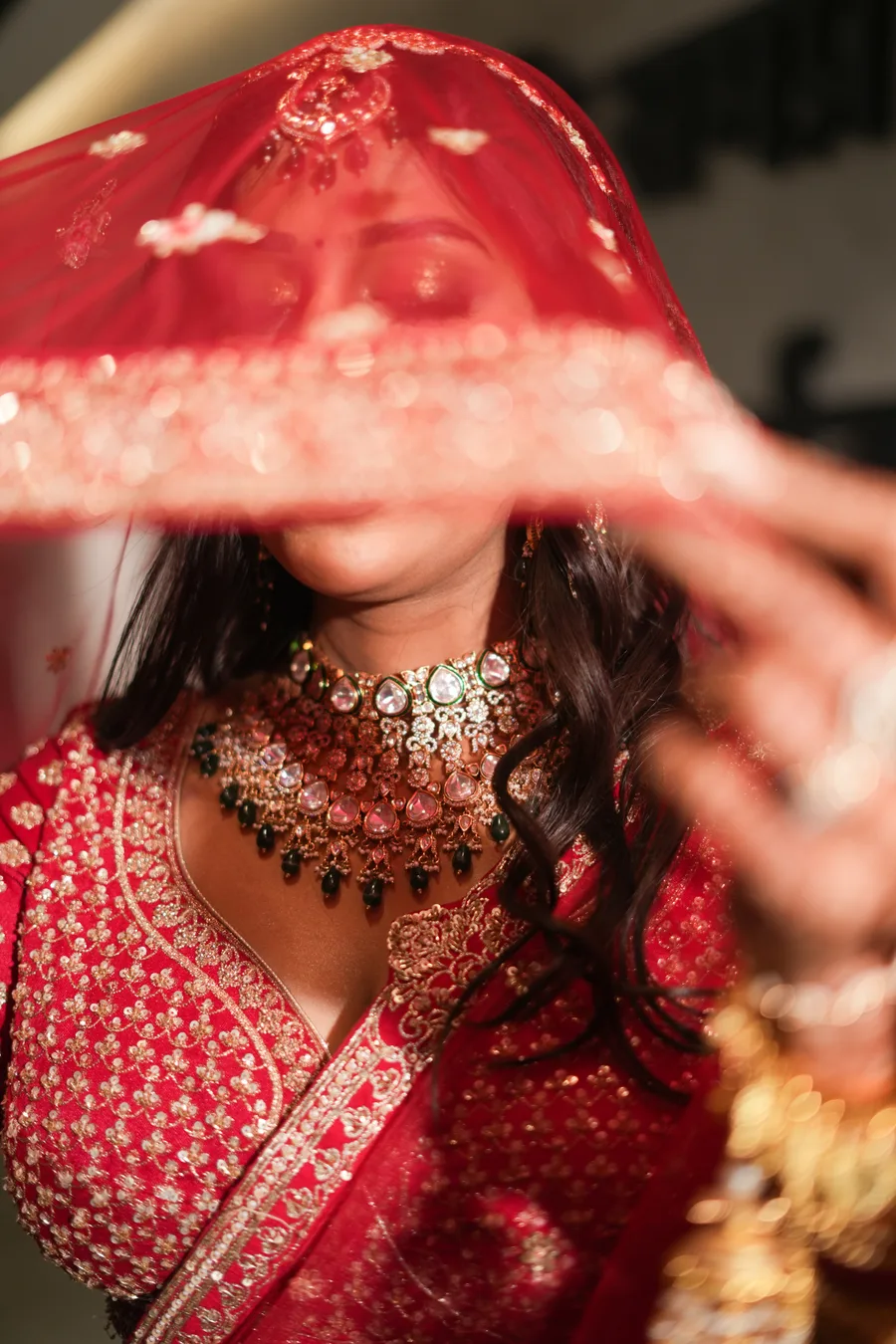
In low-light settings, metering becomes particularly important. Expose primarily for subjects' faces, allowing ambient venue lighting to fall slightly darker. This exposure choice ensures subjects read clearly while ambiance remains visible but atmospheric. The couple glows; the venue frames them. If you slightly reduce décor's colour saturation during editing—a subtle desaturation of background elements—subjects in fully saturated colour appear more prominent. Warm versus cool light also communicates hierarchy. Subjects lit with warm light against cooler-toned surroundings pop forward visually.
Across an entire wedding album, décor functions best when it serves narrative rather than overshadows it. The mandap's design matters because it contextualises the ceremony and reflects the couple's aesthetic. Think of décor as stage setting rather than primary subject. The most successful wedding albums move fluidly between focus levels: full-venue context shots establish the environment, people-centred frames tell the story, detail shots celebrate craftsmanship. This rhythm maintains clear hierarchy while celebrating every dimension of the day.
The Complete Vision and Your Wedding
A beautifully designed stage enhances a performance; it doesn't replace the performer. Wedding photography operates similarly: décor enhances the story of the people marrying. Approaching venue documentation with this perspective ensures that photographing wedding décor without losing the people succeeds naturally—not as competing interests but as complementary elements of a unified narrative.
If you're planning your wedding and want to ensure your venue's beauty is honoured while your relationship remains photographically central, we'd be delighted to discuss how we approach this balance. At Lens9 Studio, we believe environments support stories—they don't replace them. Let's create an album where your love story shines as brightly as the venue you've chosen to celebrate it.